
Service Residential
Log Cabin Staining
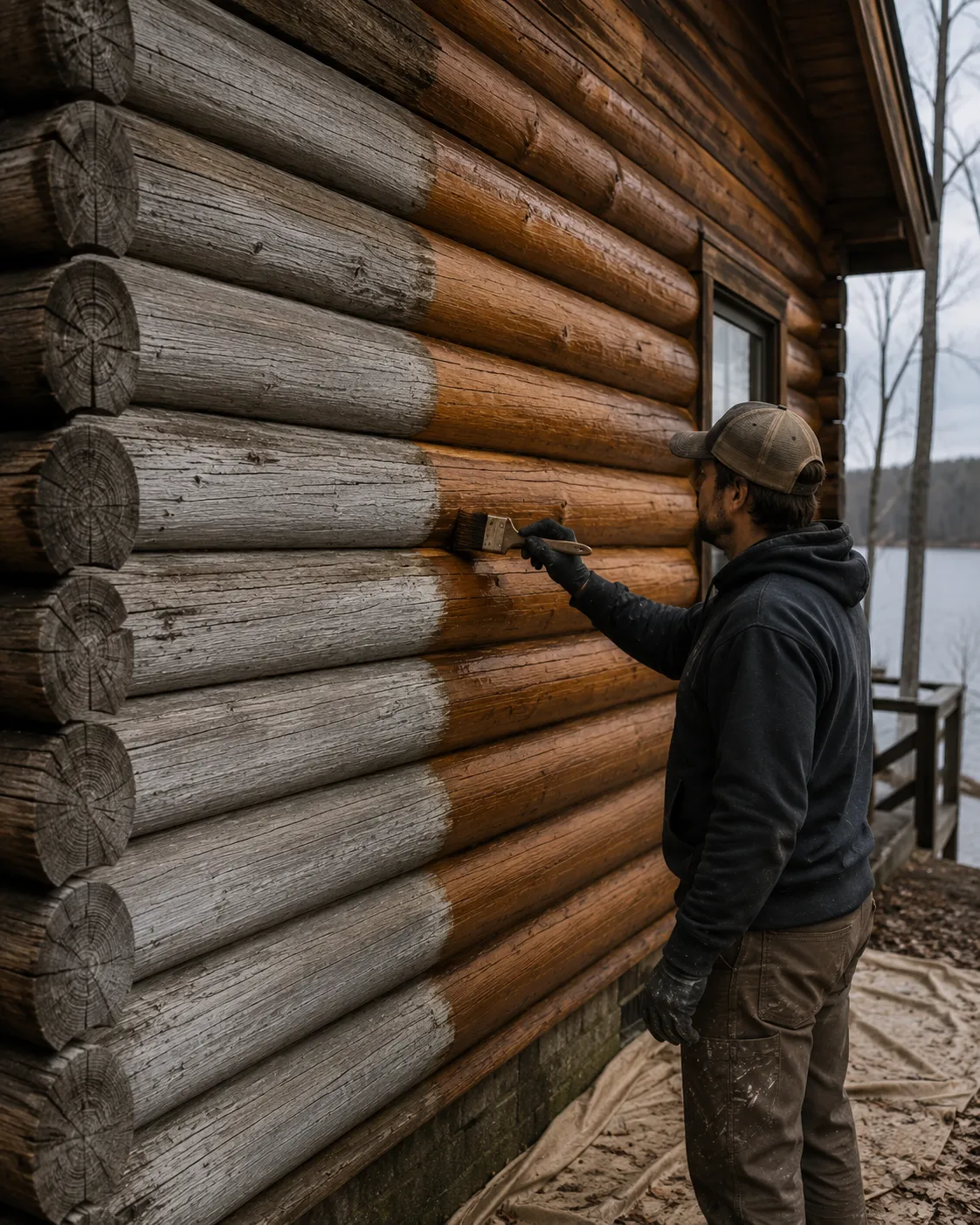
Log homes take a beating in Kentucky — UV on the south wall, moisture on the north, and freeze-thaw everywhere. Staining a cabin isn't painting a house. It starts with getting the old finish off completely, treating the wood, and applying a stain that soaks in instead of sitting on top.
01 What’s included
- Media blasting or chemical stripping of failed finishes
- Borate treatment against rot and insects
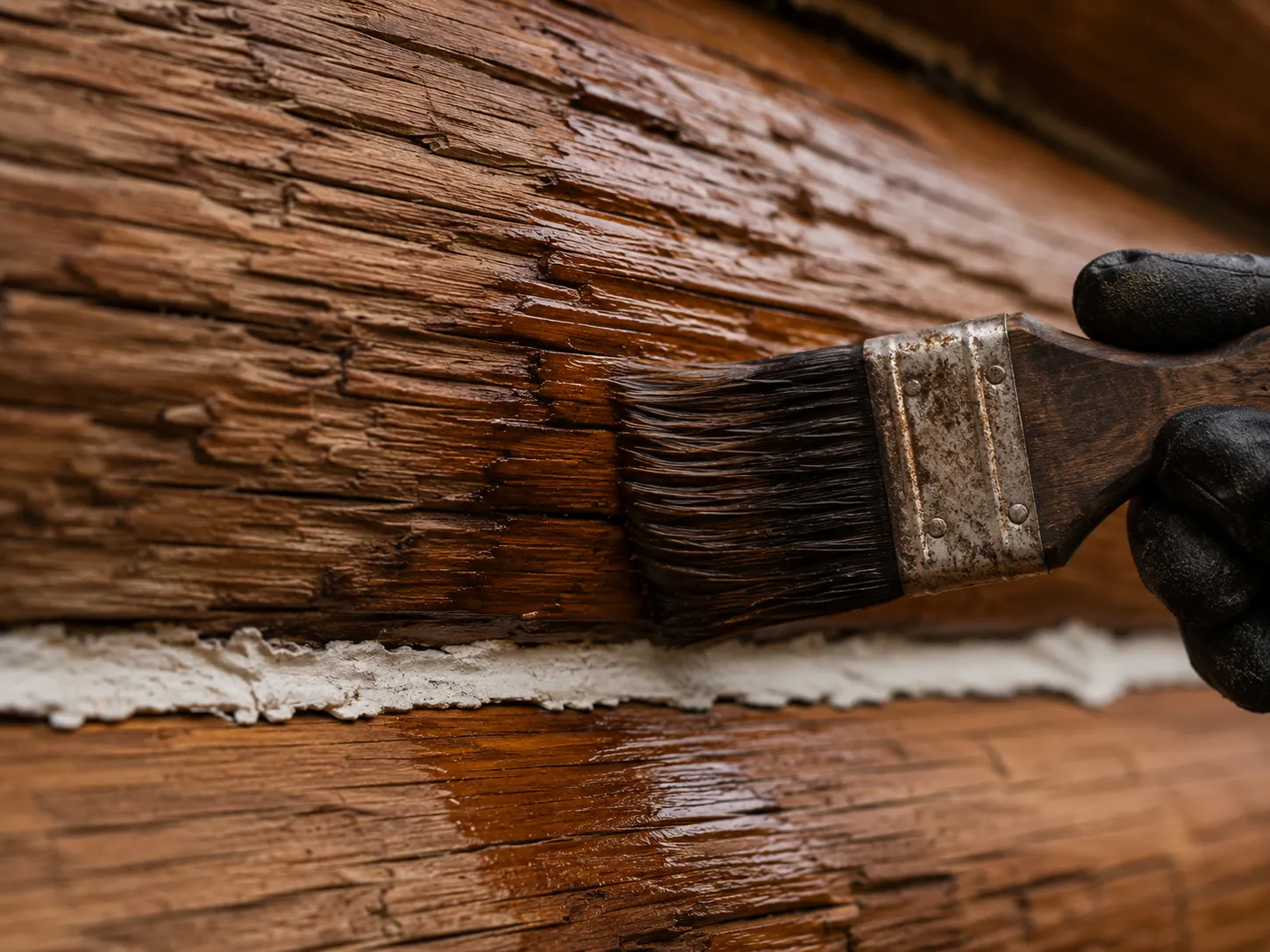
- Chinking and caulk repair between courses
- Penetrating oil or hybrid stain, brushed by hand
- Clear topcoat on high-exposure walls
02 Why it matters
A film-forming finish on logs traps moisture and peels within two or three seasons — then you pay to strip it all over again. A properly prepped, penetrating stain breathes with the wood and weathers evenly, so maintenance coats go on without stripping. Done right once, a cabin stays on a simple 3–5 year recoat cycle instead of a full restoration.
Free estimates